Research
Muyu Gu’s research connects experimental biology with quantitative measurement, statistical analysis, visualization, and genetic interpretation.
Experimental systems and measurement
Doctoral research investigated physiological and genetic aspects of hydrotropism in the maize primary root. A Hydrotropism Analyzer research system supported controlled observation of time-dependent root responses to water and gravity.
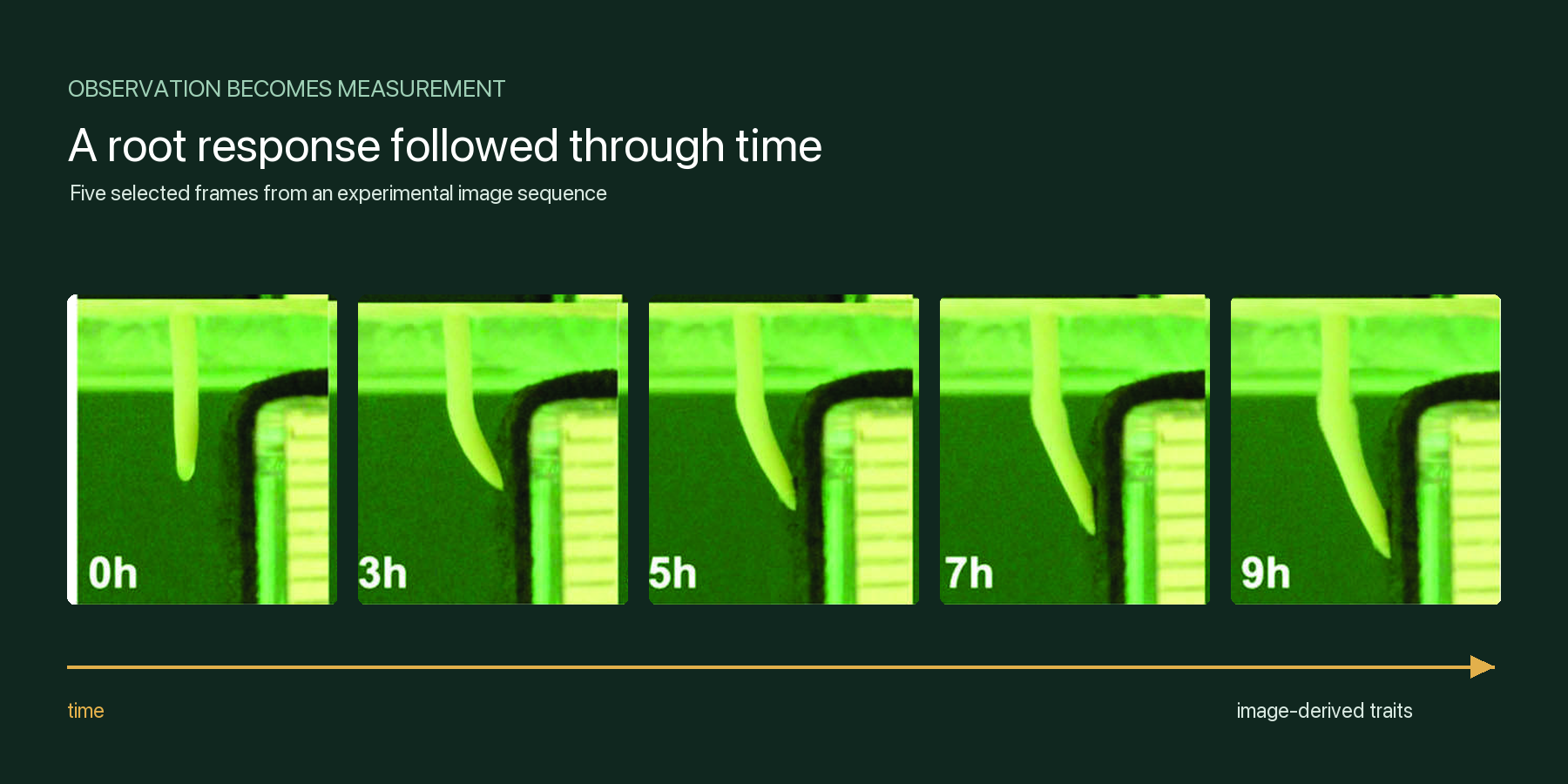
Selected time points from Dissertation Figure 2.2.
ImageJ, SMARTROOT, and IC Measure were used to convert image and video records into quantitative measurements. The workflow is not described as a fully automated computer-vision system.
Quantitative analysis
Documented R workflows combined data cleaning and visualization with experimental comparisons, multivariate analysis, mixed models, logistic regression, resampling, and uncertainty-aware interpretation.
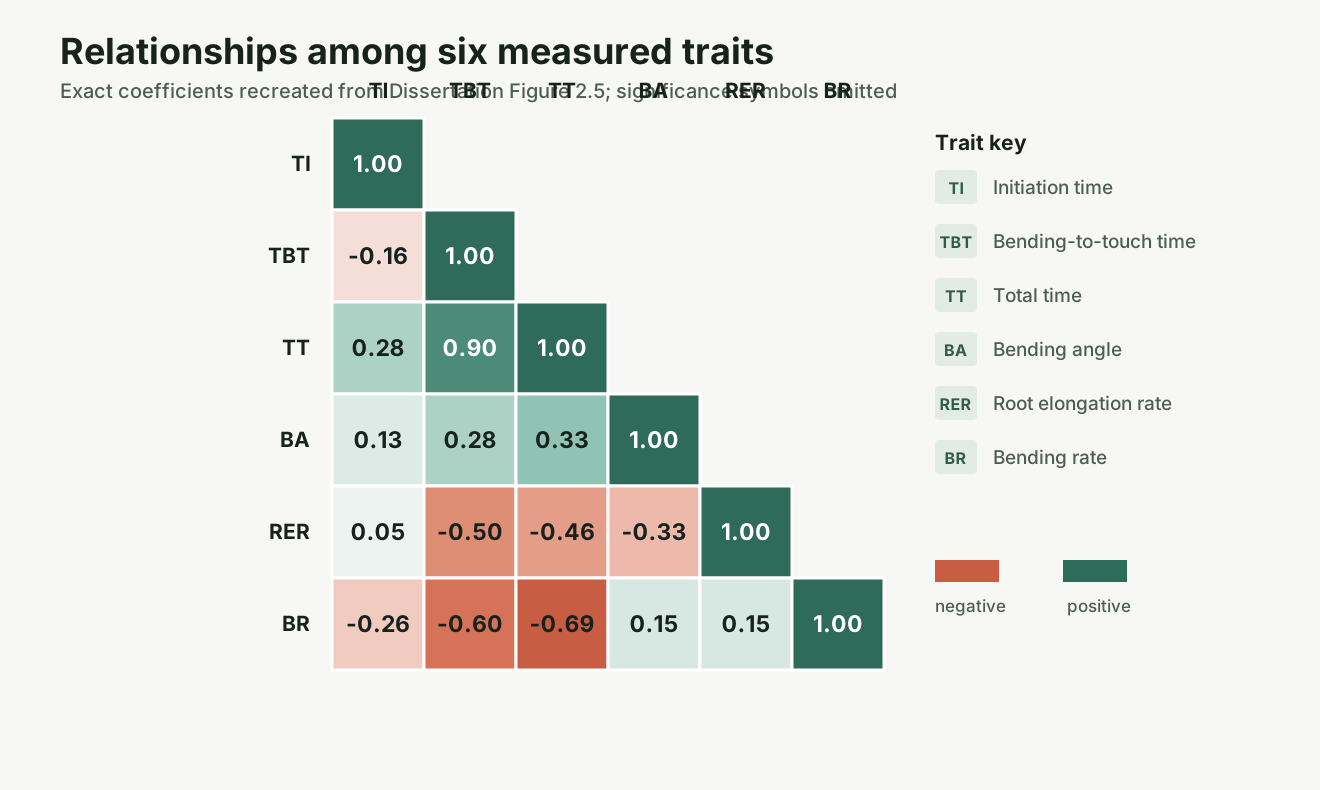
Exact coefficients from Dissertation Figure 2.5; significance symbols are omitted.
Genetic analysis
Genotype quality control in TASSEL and GWAS/QTL-oriented work in GAPIT considered multiple association models, population structure, kinship, significance thresholds, linkage disequilibrium, and candidate-region interpretation.
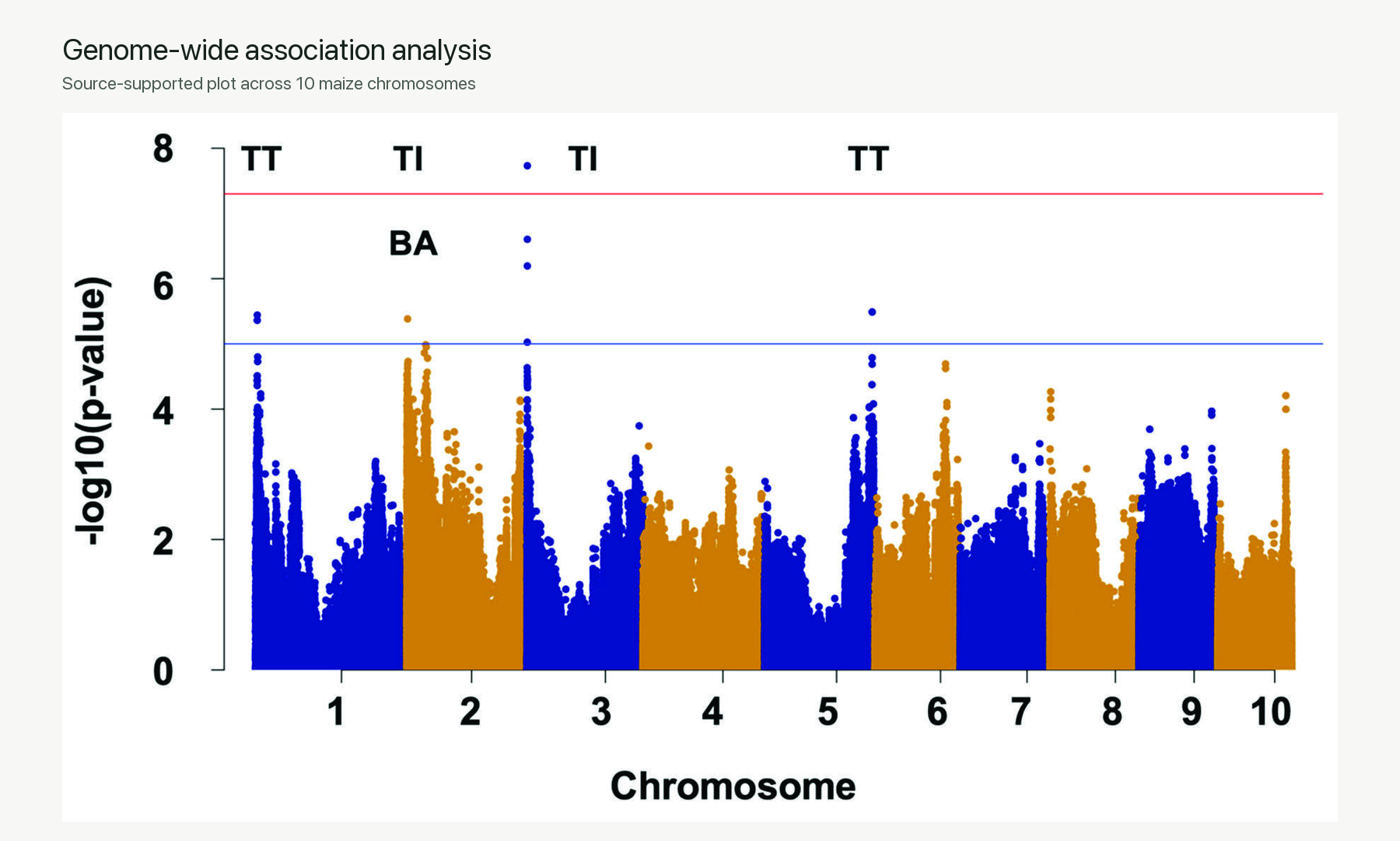
Derived from Dissertation Figure 3.5. Specific loci and candidate genes are not interpreted here.
Specific loci, candidate genes, effect sizes, and comparative model claims are not published on this site.
Reproducible workflow

Diagrammed from the verified research workflow.
Comparative and collaborative work
Research artifacts document comparative hydrotropism and gravitropism work involving maize and common bean, plus authored or co-authored outputs on quantitative phenotyping, candidate-gene analysis, and agricultural biological data.
Artifact authorship does not by itself establish sole responsibility for every analysis, presentation delivery, or award status.
Selected outputs
- Gu, M. (2025). Physiological and Genetic Studies of Hydrotropism in the Maize Primary Root. Doctoral dissertation, South Dakota State University.
- Wang, Y., et al., including M. Gu. (2020). “Hydrotropism in the primary roots of maize.” New Phytologist, 226, 1796-1808. https://doi.org/10.1111/nph.16472
- Authored or co-authored research posters on root tropisms, quantitative phenotyping, genetic analysis, and agricultural biological data.
This selected list is not presented as a complete bibliography. No total publication count or manuscript-status claim is made.
Research boundaries
Controlled experiments support precise comparisons, but do not by themselves establish field-scale outcomes, improved yield, commercial readiness, or a complete molecular mechanism. Measured phenotypes remain distinct from mechanisms not directly tested.
Read the hydrotropism case study or review selected projects.